business, culture, technology

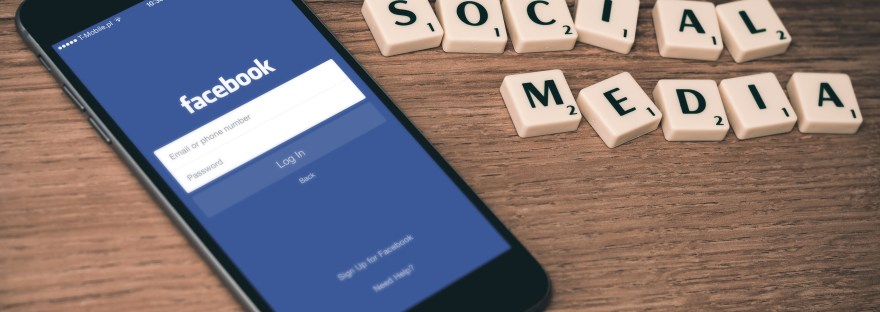
Social Media And YOU

As of yesterday September 7th, the world population is estimated at 6.9 billion. Surprisingly, the number of mobile phones across the globe is not far behind. According to Wikipedia, mobile phones population across the globe is approximately over 5 billion.

The battle in the mobile world has upraised during the last decade. Whilst ten years ago, owning a personal mobile phone was restricted to the upper class of the society, today, a mobile phone is but a commodity. In Singapore, you can observe that the working class population, an individual within the range of monthly income of SGD 2,000 (+/- 10%) owns at least 2 mobile phones.

In China, the mobile subscribers population is approximately at 1.3 billion and the mobile phone population is at 900 millions. India is not far behind with a 1.2 billion subscribers and 850 millions mobile phones.

The fragmented competition for the mobile industry paved the way to the various mobile phone operating systems – Apple’s iOS, Google’s Android, RIM’s Blackberry OS 7, Samsung Bada, the good old Symbian, Palm’s WebOS, etc.

Aside from the mobile phone operating systems, the stiff market competition gave the pressure for the mobile phone operators to be at its best. It also has created a key trend in 2011, that is the social media networks.

In social media networks, the consumers are analyzed based on their mobile phone behavior and their location based patterns. The numbers that you frequently dialed from your mobile phone is being understood by analysts paving the way to creation of various social media models in order to provide you with the best mobile subscription package that fits your lifestyle.

Location based services on the other hand, analyses the places that you frequently visits. In countries like Indonesia, Philippines, Thailand, and even Malaysia, you will notice that a change in your location gives the way for the various advertisings that targets your location. Sometimes, just entering the malls, you will be bombarded with various SMS or text messages from mall boutiques giving away discounts or sales.

Aside from the purely telecommunications social media analysis, mobile applications are also being used for majority of consumer based study. Twitter (http://www.twitter.com) is one of the key source of social media information. It is said that Twitter gave the consumers ‘the freedom of speech’. Hotel and tourism reviews mobile apps (Tripadvisor, Kayak, etc) are also a major contributor for the said study. Foursquare (http://foursquare.com) uses the location based approach in terms of social media. For the businesses, location based marketing paves the way to understanding the location patterns giving the consumers the based packages and promotions that suit their travel, shopping, dining lifestyle, and the like.

While there are a lot of advantages of social media, the major downside of social media networks is the consumer privacy. It can sometimes be exploit and can be used against a consumer for variety of reasons.

As always, I always mention that if you don’t want to be traced and searched, the best way to do so is to turn off thy mobile phone. However, these days not using a mobile phone is like living in the prehistoric stone age.

In our modern world, the business and technology keeps on innovating in order to thrive. And in order to compete and thrive is to give the best to the market audience.

And that is YOU.

Related Post: You’re Tagged And Analyzed

Til next time. Au revoir.

Citations:

– Various citations. Please contact the author.

analytics, business, cep, technology

The Value of Complex Event Processing (CEP) & The Story of Alice in the not so ever Wonderland

Once upon a time there was a lady (let’s call her Alice) who was very practical that she has her fixed deposit – FD savings in tact in the bank. The bank is very happy with her savings as it would give the bank the assurance and increase in their wealth management for greener investments.

The bank is equipped with a high-end infrastructure in analytics and sophisticated business intelligence (BI) system giving their business analysts and frontline business professionals flexibility in their quantitative analysis, trending, and forecasting.

The BI infrastructure of the bank is still using the traditional approach. Incremental and delta data changes will be extracted by the ETL, that is, Extract, Transform & Load the data to their target analytics engine. Or the approach can be  ELT, that is, Extract, Load, & Transform the data to their target analytics engine. Once all the transformations are complete, the data that are once OLTP in nature now becomes OLAP and is ready for analysis and ready for usage of the bank’s downstream systems.

The service level agreement (SLA) of the bank’s IT department to the business is 12 hours. The extraction of data up to the completion of all the transformation jobs needs to complete at 6AM everyday. Previously, the SLA was 15 hours since the decision systems environment is free by 3PM. But due to ever changing demands of business analytics, the SLA is now reduced to 12 hours and the IT department is having tough time coping up because their analytics database engine is starting to suffer from performance degradation.

The bank’s business analysts does collect their data everyday but their method of analysis based on the business process is within 1 week worth of data. There wasn’t a near real time business process to analyze the behavior of account holders.

Alice’s FD account has been very good for the last 2 years. She belongs to the demographics of single, female, high income professional, very good standing on accounts, and within the age of 25 to 30.

However changes happened in Alice’s life. In less than 1 week, Alice performed the following transactions:

  1. Withdrawal from FD accounts
  2. Withdrawal from Savings accounts
  3. Withdrawal from Current accounts
  4. Applied for a personal loan

After the above withdrawals (Events 1 to 3), her demographics has actually changed to single, female, high income professional, poor standing on accounts (risk), and within the age of 25 to 30.

When Alice applied for the loan (Event 4), she was surprised that her loan was granted. But of course, she was happy.

Why did the bank approved Alice’s loan?

Simply because when the loan officer saw Alice’s account holder profile, she still belongs to the very good accounts. Though there were withdrawals from Alice’s accounts, the loan approver thinks that Alice may have some investments in the bank that is not visible to the loan officer due to the bank’s security policies.

The loan officer doesn’t know that the demographics profile analysis wasn’t updated yet.

Clearly based on the above scenario, Alice is under the risk of defaulting her payment to her loan and the bank is also under the risk for non payments.

If all the four complex events that Alice did were captured in real time and handled by various business processes or rules, the bank would have the chance to acknowledged the risk of lending the loan to Alice to avoid financial losses.

Alice story is a normal customer behavior.

However, if there are one million bank customer who performed the complex events that Alice did without the bank realizing it, it is not surprising why banks suffered financial losses and can probably attributed to the recent financial downturn that happened globally. The Great Depression of the Financial markets.

After the business realizes their gaps, financial institutions have demanded for real time analysis of events.

Previously, the OLAP is sitting in the datawarehouse and is only accessed and analyzed once a week or everyday for operational reporting, the business demands have changed that they need the events to be processed and analyzed as soon as it happened and entered in the company’s analytics system.

Analytics has evolved. As always.

Complex events processing or greatly known as CEP systems is the analysis of different levels of events that correlates to the business rules or processes.

As soon as the events have entered into the CEP stream, it is analyzed immediately based on the rules thus triggering the different actions as provided by the business logics. It provides advancement and flexibility to the company’s frontline force – business analyst and business support team.

What’s the value of having a CEP system?

(1) It provides an enhanced risk management system. The earlier alert of Alice’s complex event 4 would trigger the bank that her demographics has changed thus the loan should be disapproved.

(2) Fraud detection. When I was in Oman, I purchased the jewelry set and used my Singapore credit card in payment. In less than 5 minutes while I was still in the jewelry shop, the bank called me to verify the validity of the transaction. As CEP systems analyzed the near real time events even in seconds, considering that I was overseas and with few delays due to the network speed, etc, the complex event that I triggered changed my behavior pattern thus it is suspect for fraud detection as I have never been in middle east let alone use my credit in middle east. The good thing about it is that if it was a true fraud, the jewelry shop can hold the person who is misusing the credit card since the bank will reject the transaction. Thanks to CEP systems.

What happens to traditional OLAP models?

Well, the usage of ROLAP, MOLAP, HOLAP, etc is still going to be used by the business for their trending, slicing and other analysis for better business positioning as required by the C-levels of the company. However, the CEP systems is catered for frontline force and business support team for real time business activity monitoring.

Who offers CEP systems in the market?

There are large enterprise vendors offering CEP solutions. Below is the list to name a few and this list doesn’t follow any ranking:

So, next time when a bank calls you to verify your transaction, don’t get annoyed especially if you’re not in the mood. You have to thank your bank that it is investing in this type of technology to better service you as a valued customer. (Wink).

Good morning America. Photo taken in New York, USA. 2005.

Til next time. Au revoir.

analytics, business, competitive advantage, technology

You’re Tagged And Analyzed

You walked in a supermarket looking for a pack of tissue as you are probably suffering from colds or for variety of reasons you need to get a tissue from that supermarket as it is the nearest store from you according to your location finder services or digital maps and GPS.

However, you spent thirty minutes walking around the supermarket searching for the tissues section and you walked away empty handed as you went impatient and just decided to search and try your luck from other shops.

You ended up frustrated and the supermarket may have loose their opportunity for you to be their loyal customer.

If the supermarket would have just placed some retails of facial tissues within the cashier counter you would have noticed it and bought it and you will praise the marketing of the supermarket as they have done good job and satisfied your need at that moment.

Analyzing what happened would lead us to realize that there was the gap between the customer and the business. There is the probability that the supermarket didn’t have a built in analytics system in their process.

Analytics – the process of solving problems based on existing set of data has been used by technology to solve business problems and create competitive advantage.

Majority of the business players invest in analytics software in order to analyze their customers, create trends, and most of all discover new demographics.

Caesar Salad with grilled chicken at Mc Donald’s in Amsterdam, The Netherlands. Now this encounter is impressive.

It is all about consumer behavior and patterns.

And technology has been evolving consistently to support the business demands.

Previously the analysis has been based on structured data – age, location, behavior, race, etc. However, as the business competition is getting tougher, technology has evolved and now supports unstructured data for analysis. The term ‘unstructured data’ is referring to blogs and videos to name a few.

Now the method of consumer analysis can start

  1. From the moment that you walk in the supermarket looking for your items.
  2. From the items that you need you are choosing from different brands. While choosing you may have been analyzed by the brand names that implements the video analytics.
  3. When you pick up the item it is a different record of event and
  4. when you decided to buy the item it is tagged as different event.

When it is the first time that you choose your credit card to purchase online, your bank suddenly called you in a matter of minutes to confirm if you really made the transaction. That is analytics in the move and the technology supports it to analyze it in milliseconds or seconds to provide fraud detection.

As all of these are happening it is a great feeling that our technology can keep up and business is there to provide us with better service and satisfaction. The downside of which is the issue on privacy as consumers.

Who are you? This is my nephew giving me his inquisitive look during my birthday celebration in Germany, September 2010.

Though privacy issues created commotion due to internet cookies detected to collect surfing data and other personal data, it is still undeniable that our personal data maybe roaming somewhere being analyzed as which demographics we belong and what regression model would suit and fit us so the business can create advantage and maintain competition.

Privacy issue is always undeniable in the digital world. And our behavior or pattern are the key to business and as well as government in providing security and welfare.

And so, we are tagged and being analyzed.

And if we do not want to be located for whatever reason… the best way to do it is to shut off the mobile phone. (wink).

This is me while gearing up and competing with in the market space of analytics technology.

Til next time. Au revoir.

business, culture, international business

The World Is Flat — Rumblings Of My Mind

When you first travel outside your country, how was the feeling?

Were you nervous about your travel? Excited? Or, confused?

Well, it really depends on the objective of your travel. : )

If your travel is purely of holidays, visiting relatives, loved ones, or even exploration, the feeling can be much of excitement.

However, if your travel is because you are working to another country as an expatriate, well, the feelings would end up as a mixed emotions with a combination of:

  1. Excitement — Yes! I am going to work in a foreign land!
  2. Nervous whether the people you will be working with can tag along with you — Will they be warm with me? or Cold?
  3. Confused because of your loved ones whom you may have to leave behind either temporarily or in a long term basis — Can I really make this or break this?

During our school days, we were informed that the globe represents the world.

Prior working as an expat, what we know is that the world is round and the earth is revolving in the sun.

When you become an expat, your views about the world will start to change. And the first challenge that you will face is –> CULTURAL SHOCK.

Culture shock is that sense of feeling when you relocate to a foreign country and you are loosing sight and feelings of those familiar surroundings, sounds, food, smells, and smiles that you were accustomed. In brief sense, you are moving out of your culture’s comfort zones.

The Dutch organization sociologist Geert Hosftede (who is famous for Hofstede’s Culture Dimensions) has another model for Culture Shock.

And, relating to this Culture Shock Model, below is my analysis based on my own experience:

Phase 1: EUPHORIA

When I first relocated to another country four years ago, the sense of excitement is sky rocket high. All I can think of is that I am now a part of the globalized economy and I am helping not only my family but also my country because of the remittances each month that I am going to send across. And, being part of the globalized world, I have the capability to discover other countries and make friends with people belonging to different culture.

Phase 2: CULTURE SHOCK

When work started, the feelings started to change. My colleagues has different working attitude as compared to what I have used to. As the work stress is increasing, the feeling of being alone in a foreign land starts to sink in. Frictions with colleagues is unescapable. I started to look for and hang around with my fellow countrymen in order to fulfill that feeling that I got an ally against the other nationalities. Homesickness is an endless battle.

Phase 3: ACCULTURATION

After three months working in the foreign land, I started to hang around with my colleagues. Every Friday we usually go out to grab some drinks (most of the time English or German beers). I started to accept our cultural differences and showed respect to other nationalities and their religions. I started to adopt the host country’s ways of living but still preserving my own values.

Phase 4: STABLE STATE

Following the 3 months adjustment, the flexibility towards other people and their culture started to established inside me. After six months working in the same company, the management has decided that I will be relocated to another country. And so it does and I accepted the relocation. I worked to another country for another period of 2 years. After 2 years, the management has decided that I will be relocated again. Work relocations have made me a flexible expat.


    Photo taken at Hall of Science, Queens New York, USA last 2005.

When I was young all I know is that the globe miniature that I have in my room is the world. After I relocated to various countries meeting people, knowing their cultures and their religions, my thinking of about the shape of the world has change tremendously.

By knowing other people’s culture and working with them, the WORLD HAS BECOME FLAT.

We are all equal regardless of where we come from. There is always challenges and differences in the working life because of culture but it can always be remediated with the expat’s flexibility and understanding of the host country’s culture.

Citations:

Til next time. Au revoir.

business, culture, international business, strategic alliance

You And Me Against The World

One key aspect of any business is relationship. A firm can have an excellent products and offerings but without partners or alliances, it is impossible for the business to grow locally or global.

Similar to subsidiaries, strategic partners or alliances greatly contributes to the multinational firm’s revenues. It is easy to knock-the-door of your prospect business partner. Once the door is opened, discussions can be done. However, until the biggest hindrance of any business relationship is overcome, the strength of relationship is undefined.

What is the biggest hindrance?

COMMITMENT AND TRUST.

Having been working on the side of the principal (or the manufacturer of the products and offerings) company, here’s the applicability based on my personal experience:

Phase 1: GETTING TO KNOW EACH OTHER

Like any business transaction, alliances start with ‘getting to know each other’ phase. In this phase, we meet our potential partners and present our products and offerings to the market. We identify how we can create and add values to the prospect partner’s current offerings to their existing customers and requirements. It is also in this phase that we demonstrate and prove our technology’s capability and what are our competitive advantages against our competitors. It is also in this phase that both parties goals and objectives are reviewed and checked if there are any differences. Selecting the partner or alliance is critical.

Phase 2: COMMITMENT

Commitment is reached when the prospect partner promised or give the commitment to allocate resources for the partnership. A clear indication of their attitudinal commitment. It is considered to be a great leap once this phase is reached as resource allocation entails manpower cost which will be shouldered by the prospect partner. In this phase, we normally conduct partner enablement seminars and workshops (to show the fair exchange) in order to kick-start the technology transfer. The partner enablement program also provides the product and solution positioning when going to the market. Most of the time, the prospect partners already have deals in their pipeline before we even reached this state. As such, the pricing, negotiations and partner margins are very critical in this phase as part of the calculative commitment. If pricing and margins are not lucrative enough and there is no demand of our products from the market, it is unlikely that the prospect will give commitment.

Phase 3: TRUST

Expectations are very important in partnership. And strategic alliances follows the credibility trust (also reputation based) whereby our partners (whether distributor or reseller) have their annual quota to meet in exchange to our fair exchange commitment to them. We also expect the benevolent trust from our partners whereby if we are the agreed product to be positioned for a certain sales deal, the partner will remain true to its promise and will not turn to our competitors.

Phase 4: MAINTENANCE

Maintaining the alliance is a long term process for both parties. The following are key factors:

  • The presence of Alliance Manager focused on partner management and growth is an important role for the global company to grow further. Some countries which deemed to be politically risky to setup the subsidiary is the good candidate for distributor and reseller business model. As such, the Alliance Manager holds a vital role.
  • Partner enablement program focused on ensuring that the partners or alliances technical or R&D team are abreast for new products and offerings. Aside from new products, product releases and product roadmap updates are equally important to be shared.

Optional Phase: SEPARATION OR DIVORCE

The contract between two parties can end up in separation if one of the parties decided to terminate due to the other parties inability to maintain the previously set expectations. It is inevitable and it is normal especially when one of the parties decide to shift their business focus to other aspects or other industries wherever the case maybe.

As such, like the song ‘You and Me Against the World’ by Helen Reddy, the promise of commitment and trust is very important when building and maintaining strategic alliances.

Here’s one video discussing and giving few points for strategic alliance:

Til next time. Au revoir.

business, culture, international business, language

Would You Like To Speak My Language?

All the world’s a stage

– As You Like It by William Shakespeare

When I think about languages, the first person that comes to my mind is William Shakespeare. His creativity in his sonnets and plays has contributed to the expansion of English language. It was during his time when theatre plays has become popular as the form of entertainment.

Language is that aspect of communication which provides understanding to both the speaker and the listener (or the giver and the receiver). Needless to say, language plays the important role in business negotiations which is critical for company’s revenue.

He’s my nephew. Photo taken at Amsterdam, The Netherlands on September 2010.

Not everyone can speak the English language. And even English language spoken by Americans still possesses differences to the English language spoken by the British. In combination of culture, knowing a host country’s language is an added advantage for the international business negotiator. With Culture + Language, we can understand with clarity where the prospect customer(s) or the prospect business partner(s) are coming from. Not all languages are spoken, there are also the bodily languages that we need to understand.

Language is one of the challenges of an international manager or negotiator that need to overcome in order to win the business negotiation or implement the company’s global strategy.

Benjamin Lee Whorf is the known American linguist famous for his study of linguistic relativity. As per Whorf’s hypothesis, the language determines the nature of culture.

Whorf argued that words provide the concepts for understanding the world. According to Whorf, all languages have limited sets of words. These restricted word sets in turn constrain the ability of users to understand or conceptualize the world. Since language structures the way we think about what we see, it determines the cultural patterns.

Whorf’s hypothesis can also be interpreted as the most influential language has the control of economy and the world.

Although there are other studies conducted to disagree with Whorf’s claims, however, in my opinion, Whorf’s hypothesis and theory is true.

Taking into example the Southeast Asia region with countries such as Malaysia, Indonesia, and Philippines, these three countries are until now sharing words. Language between these three countries varies due to the colonization of different countries depicted in their country history. However, having been living, working, and communicating with these countries made me realized that we are still sharing few old words of which the meanings are exactly the same. And those words that we don’t have the commonality have been borrowed from the countries who colonized us. The behavior of the people or some aspects of culture vividly show similarities. When I consider comparing the country ratings of Hofstede’s Cultural Dimensions country ratings, it also shows similarities to some aspects of culture. Below is my analysis based using Hofstede’s Cultural Dimensions of National Culture:

In conclusion, by basing from this example, the influence of language to other countries can be a tool to tap and to gain advantage during business deals and transactions to the host country. However, this is only the beginning or door opener for the international manager or business negotiator, it is still necessary to further understand not only the language that is verbally communicated but also the body language (implicit languages) from those countries belonging to the High Context Languages as distinct by anthropologist Edward T. Hall.

In the current economy, English has been the most common form of language used in business negotiations. As such, it is important for the international manager or negotiator to use the simplest English words (avoid the ‘slang’) in order to clearly deliver the message to the targeted audience.

As the famous Shakespeare once coined:

Brevity is the soul of wit.

It is through the simplest and precise words one’s intelligence is shown.

Til next time. Au revoir.

Citations:

  1. Cullen J, Parboteeah P, Multinational Management Strategic Approach 4ed, Thomson South-Western, c. 2008, pp. 641 – 643
  2. Benjamin Lee Whorf, “Wikipedia, the free encyclopedia”,  http://en.wikipedia.org/wiki/Benjamin_Lee_Whorf(3) Geert
  3. Hofstede Cultural Dimension http://www.geert-hofstede.com/hofstede_dimensions.php